
The network of electrical contractors in Bloomington reaches Worthington homes that were built mostly in the forties through the sixties, when fuse boxes were standard and circuits were sized for far fewer appliances than a household runs today. A professional electrical panel upgrade often starts the conversation, because the panel is where most of what these homes are carrying first shows up.
When the wiring in a house is older than the appliances plugged into it, a general approach misses the point. Worthington homeowners call a local electrician because the work has to match what is actually inside the walls.
Knowing Worthington Homes Changes How the Work Gets Done
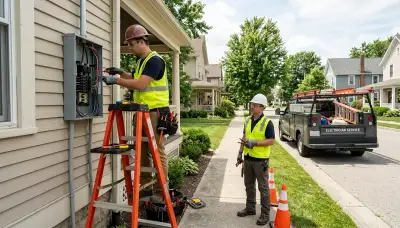
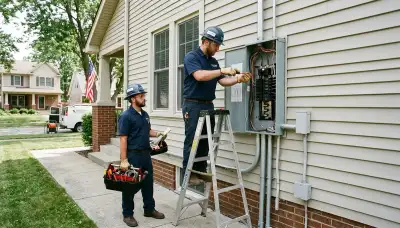
A local electrician working in Worthington knows that most of these houses were built in the forties through the sixties, that panels are typically found in a basement or utility closet, and that the wiring runs through spaces that were never designed for the loads these homes carry now.
Two jobs come up often in houses built this way: replacing a fuse box that has no room to grow and running new circuits through finished walls where access is tight. Homeowners in nearby Bloomfield, IN residential electricians deal with similar conditions on houses from the same period.
If something in the panel looks wrong or an outlet feels warm, getting it checked now costs less than waiting until the problem decides for you.
Electrical Work Matched to How Worthington Homes Are Built
An off-the-shelf approach fails in houses where the basement panel sits at the end of a long run, the crawlspace limits how a new circuit can be routed, and the walls are plaster over lath rather than drywall that opens cleanly.
Detached homes here often have a garage or outbuilding on a separate run that has aged at a different rate than the house itself, which changes the scope of the job. Attached homes sometimes share a service entrance wall, and that changes access. Expert electrical wiring work in either case starts with understanding the structure before pulling a single wire.
Four services fit the way Worthington homes are built: quality generator installation for houses whose panels can support a transfer, reliable GFCI circuit protection in kitchens and bathrooms that were wired before it was required, specialist ceiling fan installation in rooms where the box was never rated for a fan, and professional smoke detector installation to bring detection up to what these houses actually need.
What Worthington Homes Were Built With Still Shapes the Work Today
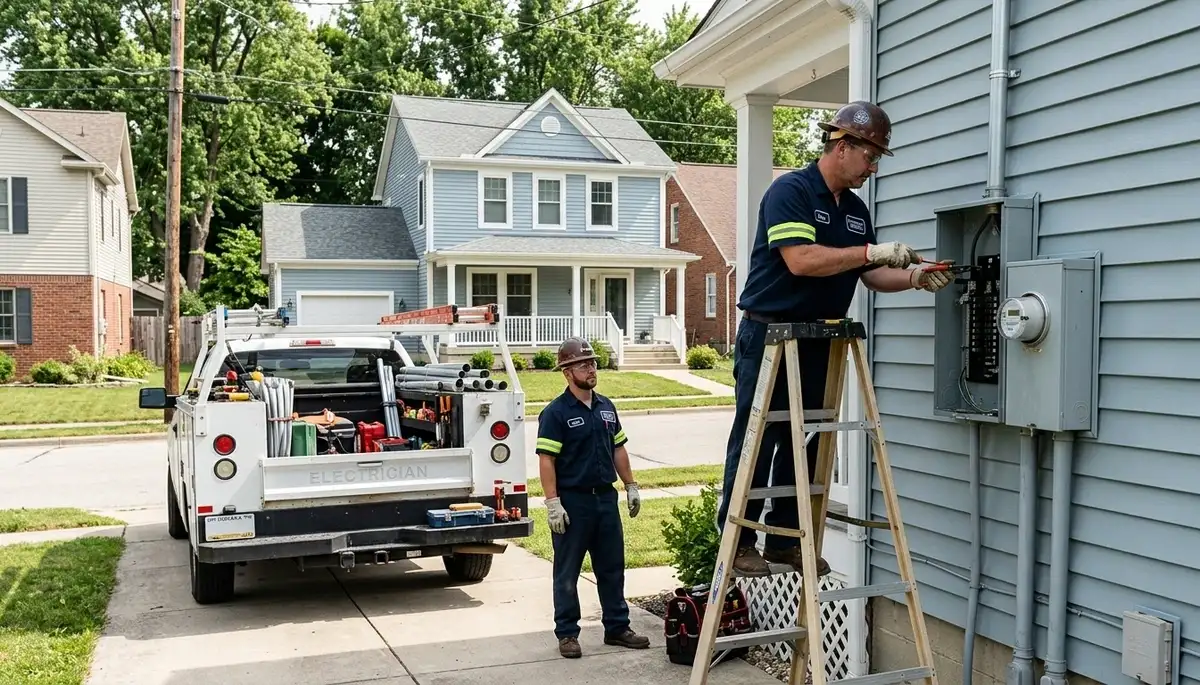
Most houses in Worthington went up in the forties through the sixties, when sixty-amp fuse boxes were the standard, two-prong outlets were everywhere, and a kitchen circuit might serve the entire back half of the house. Three things follow from that: the panel is almost certainly undersized for today's loads, the outlets near water have no ground fault protection, and the circuit count in every room is lower than what the room is being asked to handle.
Fuses Instead of Breakers
A fuse box that keeps blowing the same fuse is telling the homeowner that one circuit is carrying more than it was sized for. Left alone, the next step is a fuse that someone replaces with a higher-rated one, which removes the only protection that circuit had and puts the wiring at risk of overheating.
Local electricians replace fuse boxes with breaker panels sized for what the house is running now, and the work is done through the existing service entrance so the disruption stays small. Homeowners in Washington, IN with the same vintage of house have gone through the same process.
Two-Prong Outlets Throughout the House
Two-prong outlets mean the wiring behind them was installed before grounding was required. Plugging a three-prong adapter into an ungrounded outlet does not add a ground; it just removes the visible reminder that one is missing. Sensitive electronics and appliances with metal housings are the first things that suffer when there is no path for a fault to follow.
Adding grounded outlets to a house wired this way involves running a ground conductor back to the panel or installing the outlets with test and reset buttons where a ground wire cannot reach. Either way, the homeowner ends up with protection that was never there before.
Circuits That Trip When Two Things Run
A kitchen where the coffee maker and the microwave share a circuit was normal when these houses were built. That circuit was not designed for both loads running at once, and a breaker that trips every morning is the house saying so. Extension cords used as permanent wiring are the other sign that the circuit count has not kept up with how the room is used.
Adding a dedicated circuit to the kitchen or bathroom resolves the tripping and removes the extension cords. The homeowner can run both appliances without watching the breaker, and the wiring behind the outlets is doing what it was sized to do.
A Service That Was Never Sized for What Was Added
A sixty-amp or hundred-amp service was adequate for a house with no central air, no electric car charger, and no shop tools in the garage. Each addition pulls against a total that the panel was never meant to reach, and on a hot afternoon when the air conditioning is running, the panel feels every amp of it.
Upgrading the service to two hundred amps gives the house room to run what is already connected and space for whatever comes next. A car charger, a pool pump, or a second air conditioning unit can be added without the panel becoming the limiting factor in how the house is used.
Tight Access in Finished Spaces
Plaster walls and low crawlspaces are the physical reality of houses built in the forties and fifties. Running a new circuit in a house like this is not the same job it is in a house with open framing and a full basement, and treating it that way leads to shortcuts that show up later.
Local electricians who know these houses plan the route before the work starts, using the crawlspace where it is accessible and fishing through walls where it is not. The goal is a finished job that does not leave the homeowner patching plaster across three rooms.
Arrange a no-pressure visit with a local electrician by calling (812) 871-4050. Someone will look at what the house has, explain what it needs, and give the homeowner a clear picture of the work before anything is scheduled.
On Call Electrical does the work right the first time, so Worthington homeowners do not have to call twice.

Full Electrical Services Available in Worthington, IN
The work below covers what most Worthington homeowners ask about. Find the item that matches what the house is showing and reach out to talk through the next step.
Urgent Electrical Repairs for Worthington, IN Homes
- Electrical Repair - A breaker that will not reset, an outlet that stopped working, or a fixture that flickers needs attention before the cause gets harder to find.
- Outlet Repair - An outlet that sparks, feels warm, or holds a plug loosely is a sign the connection behind it has failed and should not be used until it is fixed.
- Switch Repair - A switch that buzzes, feels hot, or controls a light intermittently has worn contacts that put the circuit at risk every time it is used.
- GFCI Circuits - Kitchens and bathrooms in houses built before grounding was required need the outlets with test and reset buttons to protect against a fault near water.
- Electrical Panel Installation - A panel that runs hot, smells like burning plastic, or trips breakers without a clear load reason needs to be replaced, not reset again.
If any of these describe what the house is doing right now, a call to (812) 871-4050 is the right next move.
Panel, Capacity, and Wiring Work for Worthington, IN Homes
- Electrical Panel Upgrade - Houses built with sixty-amp or hundred-amp service were not sized for central air, car chargers, or the appliance load a household carries today.
- Electrical Service - The service entrance on a house from the forties or fifties may be undersized, deteriorated, or both, and the panel inside reflects whatever the entrance can deliver.
- Electrical Wiring - Wiring installed before modern standards may be aluminum, ungrounded, or run in a way that made sense then but creates problems now.
- New Construction Wiring - An addition or a finished basement needs circuits planned for how the space will actually be used, not borrowed from what the house already has.
- Home Electrical Inspections - A full inspection tells the homeowner exactly what the house has, what it is missing, and what order the work should happen in.
Knowing what the house was originally wired for is the starting point for deciding what it needs now.
Safety and Protection Work for Worthington, IN Homes
- Smoke Detector Installation - A house with detectors only near the bedrooms or with units that are more than ten years old does not have the coverage it needs.
- Fire Alarm Installation - Interconnected alarms mean that when one detects smoke, every alarm in the house sounds, giving everyone in every room the same warning at the same time.
- Whole Home Surge Protection - A surge that comes through the service entrance can reach every outlet and appliance in the house in the same instant; protection at the panel stops it there.
- Lightning Surge Protection - A direct strike or a nearby hit sends a surge through the wiring that a standard breaker is not designed to catch.
- Home Energy Audit - An audit finds where the electrical system is working harder than it needs to and where the house is losing money it does not have to lose.
Each of these addresses a risk the homeowner can picture: a fire that starts in the wall, a surge that kills every appliance, a detector that does not go off in time. Getting ahead of any one of them is worth the call. Reach out to (812) 871-4050 to talk through which one fits what the house needs most right now, and a local electrician will walk through the options without pressure.
Lighting, Outdoor, and Added-Load Work for Worthington, IN Homes
- Electric Car Charger Installation - A dedicated circuit sized for a level-two charger means the car charges overnight without pulling against everything else the house is running.
- Generator Installation - A standby or portable generator connected through a proper transfer keeps the house running when the power goes out, without backfeeding the line.
- Landscape Lighting - Outdoor lighting on a dedicated circuit with proper weatherproofing holds up through conditions that would fail a fixture run off an extension cord.
- Security Lights - Motion-activated lights on the exterior need a circuit that can handle the load without tripping the breaker every time they come on after dark.
- Ceiling Fan Installation - A ceiling box that was not rated for a fan needs to be replaced before the fan goes up, or the fixture will work itself loose over time.
Added loads are what Worthington homes are being asked to carry now, and the original wiring was not designed for any of them. Getting each one on its own circuit, sized correctly from the panel out, is what keeps the rest of the house running the way it should.