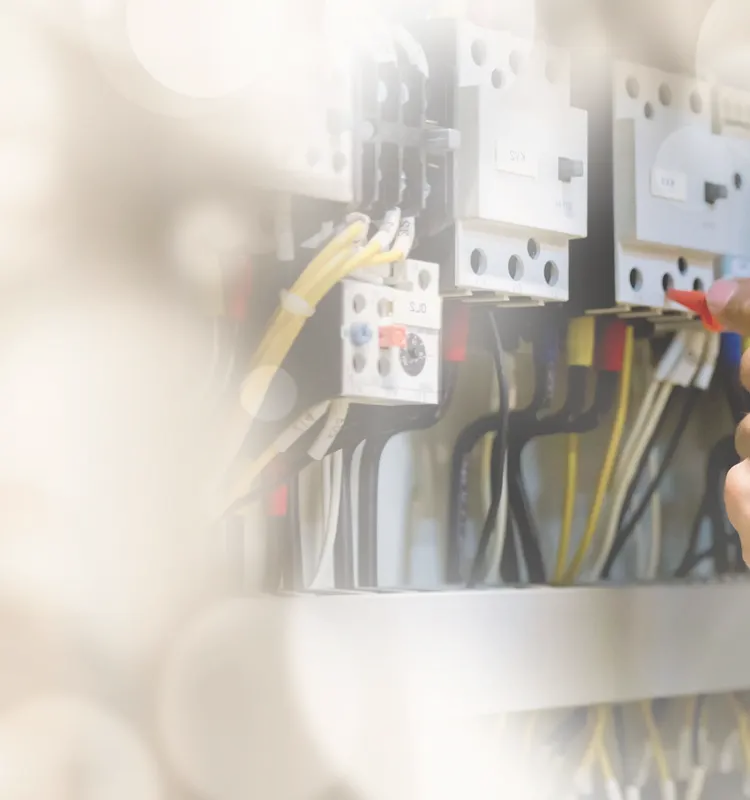
The homes in Washington, IN carry the electrical systems of an older city, and the electrical contractors in Bloomington who serve them know what that means: fuse boxes that were never swapped out, panels with no room left, and outlets that run warm because the wiring behind them was installed before grounding was required. Reaching those systems calls for professional electrical panel upgrade work done by electricians who have opened walls in houses built this way.
Washington homeowners call a local electrician rather than a general one because the work inside these houses is specific to when and how they were built, and a stranger to them loses time figuring that out.
What Local Electricians Know About Washington Homes
The houses in Washington were built largely in the forties through the early sixties, when sixty-amp service and fuse-based panels were standard. A local electrician recognizes that layout the moment the panel door opens, and knows exactly what the job will involve before a single wire is touched.
The work these homes most often need falls into two categories: replacing undersized panels that can no longer handle modern loads, and adding circuits to kitchens and bathrooms where a single run serves everything. Homeowners in Bloomfield, IN face similar situations in houses of the same age.
If a breaker will not reset or an outlet runs warm, that problem will not fix itself. Getting it looked at early keeps a small repair from becoming a large one.
Electrical Work Matched to How Washington Homes Are Built
An off-the-shelf approach fails in houses built over basements with finished walls and original wiring runs, because running a new circuit is not a morning of work when the path through the framing is blocked by decades of accumulated insulation and added walls.
Homes with full basements allow panel access from below, which shortens the job on a service upgrade. Older brick houses with plaster walls require a different approach when fishing new wire, and that changes the labor involved. Detached garages on these lots often need their own sub-panel run. Expert ceiling fan installation in homes with plaster ceilings calls for the same careful approach.
Four services that fit these homes directly: quality GFCI circuit installation for kitchens and bathrooms that never received it, reliable generator installation for homes whose panels can support a transfer switch, specialist smoke detector installation to bring older houses up to current detection standards, and professional electrical panel installation for houses still running original equipment.
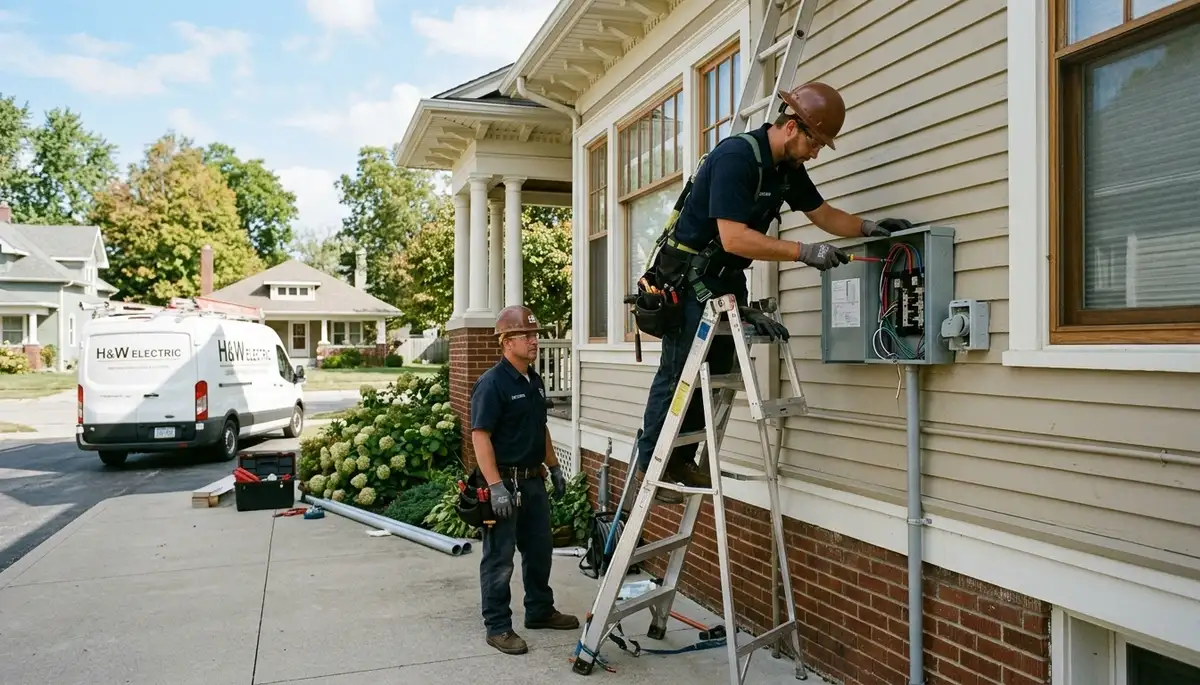
When Washington Homes Were Built Still Shapes What They Need
Most houses in Washington went up during the forties through the early sixties, when sixty-amp service, fuse-based panels, and two-prong ungrounded outlets were the standard. Three things follow directly from that: the service is undersized for anything added since, the outlets near sinks have no reset buttons, and the wiring was never run with a ground wire.
The Panel Has No Room Left
A homeowner notices the fuse box in the basement or the breaker box with every slot taken. Behind that is a service sized for a house that ran a few lights and a refrigerator. Adding a window unit, a dishwasher, or a second bathroom pushed it past what it was built for, and now there is nowhere to add a circuit without doubling up.
Local electricians replace the panel and bring the service up to a capacity the house can actually use. Homeowners in Worthington, IN with houses of the same age have gone through the same upgrade and found the difference immediate.
Outlets Near Water Have No Reset Button
In kitchens and bathrooms of houses built before the early seventies, the outlets were wired without ground fault protection. The homeowner sees a two-prong outlet or a standard three-prong with no test and reset buttons anywhere nearby. That is not a cosmetic issue; it is a shock risk that the original wiring was never designed to prevent.
Adding the outlets with test and reset buttons to every wet area corrects the gap. The homeowner ends up with protection that meets current standards and outlets that actually fit modern plugs without an adapter.
Connections That Run Warm
When lights dim on a circuit or an outlet feels warm to the touch, the wiring at the connection has degraded over decades of use. In houses from the late sixties and early seventies, aluminum branch wiring was common, and the connections it makes with devices and fixtures loosen over time and generate heat.
An electrician inspects every connection on the affected circuit, installs the correct devices rated for that wiring, and re-torques each terminal. The two things that change: the heat stops, and the circuit stops tripping under normal load.
Modern Loads on a Service Never Sized for Them
A car charger in the garage, a new central air system, or a chest freezer added to a basement utility room each draws more than the original service was sized to carry. On a hot afternoon the panel handles all of it at once, and the breaker that trips is telling the homeowner something the service has been signaling for years.
Adding capacity means replacing the panel and upgrading the service entrance to a size that accounts for what the house actually runs now. Once that is done, the homeowner can run the car charger, the air conditioning, and the kitchen at the same time without watching the breaker box.
Reaching the Work in a House Built This Way
In a house with plaster walls over wood lath, running a new circuit from the panel to a room on the opposite end of the house is not a straight pull. The framing, the insulation packed into cavities over the decades, and the finished ceilings all stand between the electrician and the destination.
Local electricians who know these houses plan the route before the first hole is opened, use existing chases where they exist, and patch only what needs to be opened. The work gets done without gutting a room to reach a single outlet.
Call (812) 871-4050 to arrange a no-pressure visit with a local electrician who knows Washington homes and can tell you exactly what the job involves before any work begins.
On Call Electrical handles the work correctly the first time, so Washington homeowners do not call twice.

Full Electrical Services Available in Washington, IN
The work listed below covers what homeowners in Washington, IN most often need. Find what matches your situation and call (812) 871-4050 to get started.
Urgent Electrical Repairs for Washington, IN Homes
- Electrical Repair - A breaker that will not reset or an outlet that sparks needs attention before it becomes a fire risk in walls that have been closed for decades.
- Outlet Repair - Loose or dead outlets in these houses often trace back to connections that have worked free over years of use.
- Switch Repair - A switch that crackles, feels warm, or fails to hold the light on is a connection problem, not just an inconvenience.
- Ceiling Fan Repair - A wobbling or dead ceiling fan in a plaster ceiling can mean a loose mounting box that was never rated for fan weight.
- Electrical Service - When the main service feeding the house fails or trips repeatedly, the whole house is affected and the problem needs a same-day look.
These repairs are handled by electricians who have worked inside houses built the way Washington houses are built.
Panel, Capacity, and Wiring Work for Washington, IN Homes
- Electrical Panel Upgrade - Homes running on sixty-amp or hundred-amp service with no room for additional circuits need a panel that matches what the house is actually running.
- Electrical Panel Installation - A panel replacement puts modern equipment in place of original equipment that was never designed for today's loads.
- Electrical Wiring - Rewiring a circuit or running new wire through finished walls in an older house requires knowing the framing and the path before the first hole is cut.
- New Construction Wiring - Additions and detached structures on these lots need wiring that ties correctly into the existing service without overloading it.
- Electric Car Charger Installation - Adding a charger circuit to a garage on a house with original service means checking capacity first and upgrading the panel if the math does not work.
These are the jobs that change what the house can do, and they are done by electricians who know what these homes were originally wired for.
Safety and Protection Services for Washington, IN Homes
- GFCI Circuits - Kitchens, bathrooms, and garages in houses built before the early seventies were wired without ground fault protection, and that gap puts the homeowner at risk every time a wet hand reaches for a switch.
- Whole Home Surge Protection - A single power event can damage every appliance and device in the house; a whole-home device at the panel stops it before it reaches anything.
- Lightning Surge Protection - A direct or nearby strike sends a spike through the service entrance that unprotected panels and devices cannot absorb.
- Smoke Detector Installation - Older houses with original detector locations or no interconnected system leave parts of the house without coverage when it matters most.
- Home Electrical Inspections - A full inspection of a house this age finds what the homeowner cannot see: connections that have loosened, wiring that has degraded, and a panel that is working harder than it should.
Each of these services addresses a risk the homeowner can picture, and each one is matched to what the houses in Washington, IN actually contain. A home electrical inspection is often the right first step before any other work begins, because it tells the homeowner exactly what the house needs and in what order.
Lighting, Outdoor, and Added-Load Work for Washington, IN Homes
- Recessed Lighting Installation - Cutting into plaster ceilings for recessed fixtures requires the right boxes and a plan for the wiring path before the ceiling is opened.
- Landscape Lighting - Outdoor lighting runs on these lots need to be protected and sized for the distance from the panel to the yard.
- Security Lights - Motion-activated security lighting on a detached garage or along a long driveway requires a dedicated outdoor circuit run from the house panel.
- Ceiling Fan Installation - Adding a fan to a room that was wired only for a light fixture means running a new circuit or confirming the existing one can carry the added load.
- Thermostat Installation - A smart thermostat in a house with original wiring may need a common wire added before it can operate, which is a quick job for an electrician who knows these systems.
These services address what Washington homes are being asked to carry now, from outdoor runs that have aged differently from the house to added loads that the original panel was never sized to handle. Call (812) 871-4050 to find out which of these fits your home.