
Homes in Quincy, IN were mostly built in the forties through the early sixties, and the electrical contractors in Bloomington who serve them know what that means: fuse boxes still in service, two-prong outlets in bedrooms, and panels sized for a load that did not include central air or a second refrigerator. Getting expert electrical panel upgrade work done right here starts with knowing what these houses were designed to carry.
When a breaker will not reset or an outlet stops working on the far end of the house, Quincy homeowners call a local electrician because the house itself is part of the answer.
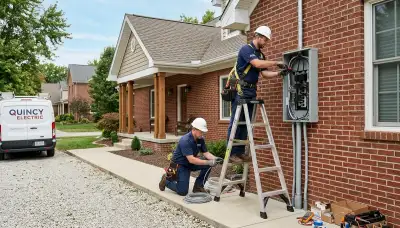
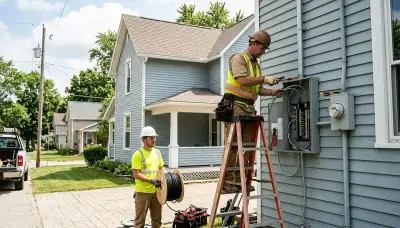
What Local Electricians Know About Quincy Homes That Others Miss
A local electrician working in Quincy has seen the same fuse box tucked into the same corner of a basement dozens of times. Knowing where the panel lives, how the wiring runs through plaster walls, and what gauge wire was standard when these houses went up changes how the job gets planned.
Houses here commonly need panel replacements and outlet upgrades that require working through plaster and lathe rather than drywall. Electricians serving Springville, IN residential electricians face similar construction, so the approach carries over.
Do not wait until a warm outlet or a tripped breaker becomes something worse. A quick look now costs far less than a repair after something fails.
Work Matched to How Quincy Homes Are Actually Built
An off-the-shelf approach falls apart fast in a house with plaster walls, a basement panel, and wiring run through cavities that were never meant to be reopened. Knowing the construction is what keeps a job from turning into a wall-opening project.
Wood-frame houses over basements let an electrician reach circuits from below, which keeps walls intact. Homes with crawlspaces take more time and more planning. A house with an attached garage adds a long run that ages differently from the interior wiring. Professional GFCI circuit installation in any of these layouts depends on understanding where the wiring already goes.
Across Quincy homes, four services come up again and again: quality smoke detector installation, reliable outlet repair, specialist ceiling fan installation, and expert generator installation for homes that lose power when the panel cannot keep up.
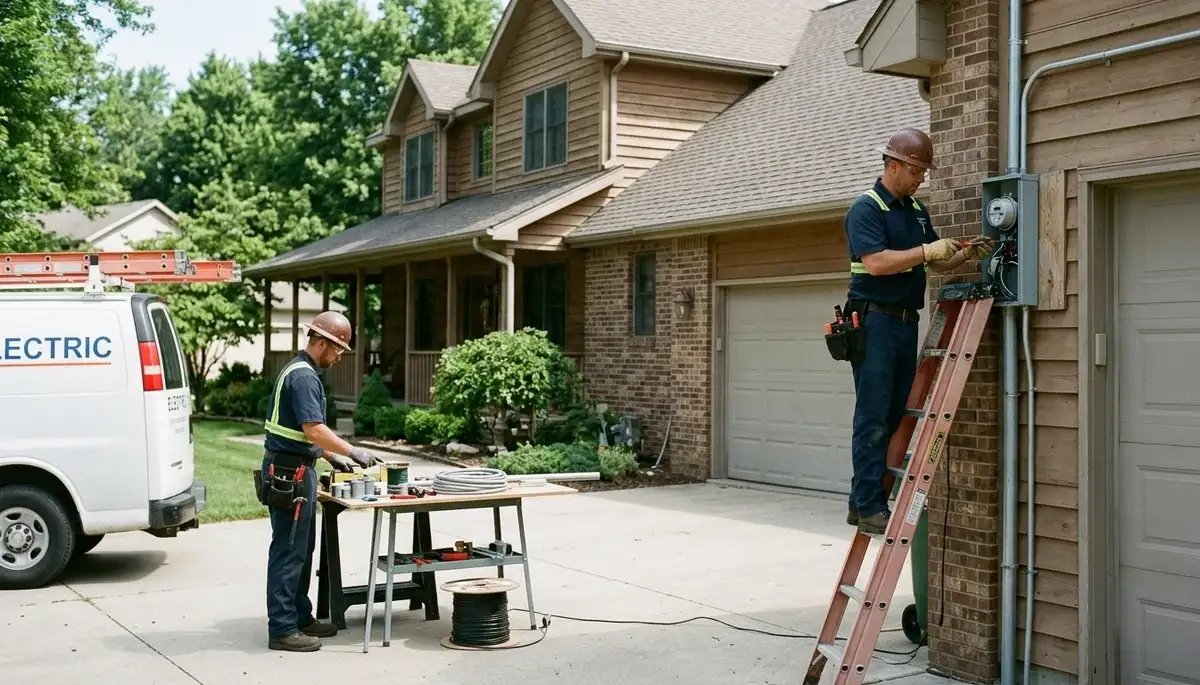
How the Age of Quincy Homes Still Shapes the Electrical Work Today
Most houses in Quincy went up between the forties and the early sixties, when sixty-amp service was standard and a household ran a handful of circuits. Those panels were wired for a kitchen, a few lights, and a washing machine. Three things follow from that: the panel is likely undersized, the circuits are too few for how rooms are used now, and the grounding that protects modern appliances was never part of the original install.
Fuses That Keep Blowing
A fuse box that blows repeatedly is not a fuse problem. It is a capacity problem. Homes in Quincy built in this era were wired for a load that did not include a microwave, a chest freezer, or a window unit running at the same time. Each blown fuse is the house telling the homeowner the service is maxed out.
Local electricians replace fuse boxes with modern breaker panels sized for how the home is actually used. Homeowners who have had this done stop managing fuses and start running the house without thinking about the panel.
Outlets Warm to the Touch
An outlet that feels warm, or a light that dims when something else turns on in the same room, points to wiring that is working harder than it should. In homes from the late forties and fifties, that often means undersized wire on a circuit that was added after the original install, or a connection that has loosened over decades of use.
Replacing the affected wiring and tightening or rebuilding the connections removes the heat source. Homeowners can plug in without checking the outlet first.
Two-Prong Outlets Throughout the House
Two-prong outlets are the most visible sign that a house was wired before grounding was required. Every room with two-prong outlets is a room where modern appliances are running without the protection the third prong provides. Years of use have not made those outlets safer.
Adding grounding to existing circuits or replacing outlets with the kind that carry built-in protection brings the house up to what modern appliances expect and reduces the risk of damage to equipment plugged into them.
A Panel That Was Never Sized for What Got Added
A car charger, a window air conditioner added to a bedroom, or shop tools in the garage each draw more than the original service was sized to handle. On a hot afternoon when the house is running everything at once, the panel hits its limit. That is the load acting as a multiplier on a service that was already at its edge.
Adding a subpanel or upgrading to a larger main service gives the home room to run what is plugged into it. Homeowners who have made this change can run the car charger and the air conditioning without watching the breaker box. Electricians serving electrical repair in Gosport, IN handle the same capacity upgrades regularly.
Getting Wiring Through Plaster Walls
Plaster and lathe walls are harder to work through than drywall. Running a new circuit in a house built this way means finding a path that does not require opening every wall between the panel and the destination. A tight basement or a finished ceiling makes that harder still.
Local electricians plan the route before the work starts, using the basement or crawlspace where it is available and fishing wire through existing cavities where it is not. The goal is a finished job that does not leave the homeowner with a wall to patch. Call (812) 871-4050 to arrange a no-pressure visit and get a clear picture of what the work involves before anything is scheduled.
On Call Electrical handles the work so it holds, the first time.

Full Electrical Services Available in Quincy, IN
The list below covers the range of electrical work available to Quincy homeowners. Find what fits the situation and reach out to talk through the details.
Urgent Electrical Repairs for Quincy, IN Homes
- Electrical repair for outlets that stop working or spark when something is plugged in
- Switch repair for switches that feel warm, flicker, or no longer control the fixture
- Outlet repair for two-prong and ungrounded outlets that leave appliances unprotected
- Electrical panel upgrade when a fuse box or undersized breaker panel keeps tripping
- Home electrical inspections before buying or after noticing repeated electrical problems
If something in the house is not working the way it should, a local electrician can find the source fast.
Panel, Service, and Wiring Work for Quincy, IN Homes
- Electrical panel installation to replace a fuse box that has reached the end of its useful life
- Electrical wiring to bring circuits up to what the house is now being asked to carry
- Electrical service work when the main connection to the house needs to be rebuilt or upgraded
- New construction wiring for additions, garages, or finished basements added to an existing home
- Electric car charger installation on a dedicated circuit sized for overnight charging
Homes built in the forties through early sixties were wired for a fraction of the load they carry now. Upgrading the panel and circuits is what makes the rest of the electrical system work the way it should.
Safety and Protection Work for Quincy, IN Homes
- Smoke detector installation in every room where an older detector has never been replaced
- Fire alarm installation for houses that have never had a wired detection system
- GFCI circuit installation near sinks, tubs, and outdoor outlets where water and electricity are close
- Whole home surge protection to keep appliances and electronics from taking a hit when power fluctuates
- Lightning surge protection for homes where a direct or nearby strike has damaged equipment before
Older homes in Quincy were built before most of these protections were required. Adding them now closes the gap between what the house has and what keeps a family safe. A local electrician can walk through the house and point out where the risks are concentrated before any work is scheduled.
Lighting, Outdoor, and Added-Load Work for Quincy, IN Homes
- Landscape lighting on a dedicated outdoor circuit sized for the run from the house to the yard
- Security lights mounted and wired to a circuit that does not share load with interior fixtures
- Recessed lighting installation in rooms where a ceiling box was never part of the original build
- Generator installation for homes where a power outage means losing heat, refrigeration, or medical equipment
- Ceiling fan installation in rooms where the existing box was not wired to handle a fan load
Added loads and outdoor runs are where a house built in the forties shows its limits fastest. Running a dedicated circuit for each new load keeps the rest of the system from carrying more than it was built for.